


The invisible competitor is the rival you never see on a sales call, never meet at a trade show and never list in your competitor spreadsheet. It does not send you a quote or return your calls. It simply shows up first when your customer picks up a phone, types a question into Google or asks an AI assistant for a recommendation. By the time you hear about it, your customer has usually made their decision.
If your enquiries have slowed, your ad costs have crept up or your regulars have gone quiet, you may be blaming the economy, the season or the business down the road. Often the real cause is less obvious: a handful of invisible competitors capturing attention before customers ever reach you.
In this guide you will learn who these invisible competitors really are, how to spot them with free tools in about half an hour, and how to win customers back with local SEO, Google Ads, a faster website and smarter content. It is written for business owners in Brisbane and across Australia.
What Is an Invisible Competitor, and Why Is It So Dangerous?
An invisible competitor is any business, platform, habit or search result that captures your customer’s attention, trust or budget without appearing on your list of competitors. It is dangerous for one simple reason: you cannot fight what you cannot see. If you never get the call, you never learn why.
Customers also behave differently from how they did even a few years ago. Most of the buying journey now happens before anyone speaks to you. People search, scroll, compare reviews, watch short videos and shortlist two or three options. Your business is either part of that shortlist or it is invisible to the buyer. That makes every invisible competitor a quiet thief of your future sales.
Most invisible competitors fall into one of these groups:
- Local rivals you do not know about: businesses that rank above you on Google Search and Google Maps.
- Advertisers who target your name: competitors bidding on searches for your brand.
- Platforms and directories: marketplaces, review sites and comparison pages that sit between you and the buyer.
- Content creators: social media accounts and videos that teach customers before you do.
- AI answers: summaries that recommend a few businesses and skip the rest.
- Do nothing and DIY: the customer who decides to fix it themselves or wait.
- Your own digital presence: a slow, outdated website or neglected profile that pushes buyers away.
Who Is Really Taking Your Customers? Seven Invisible Competitors
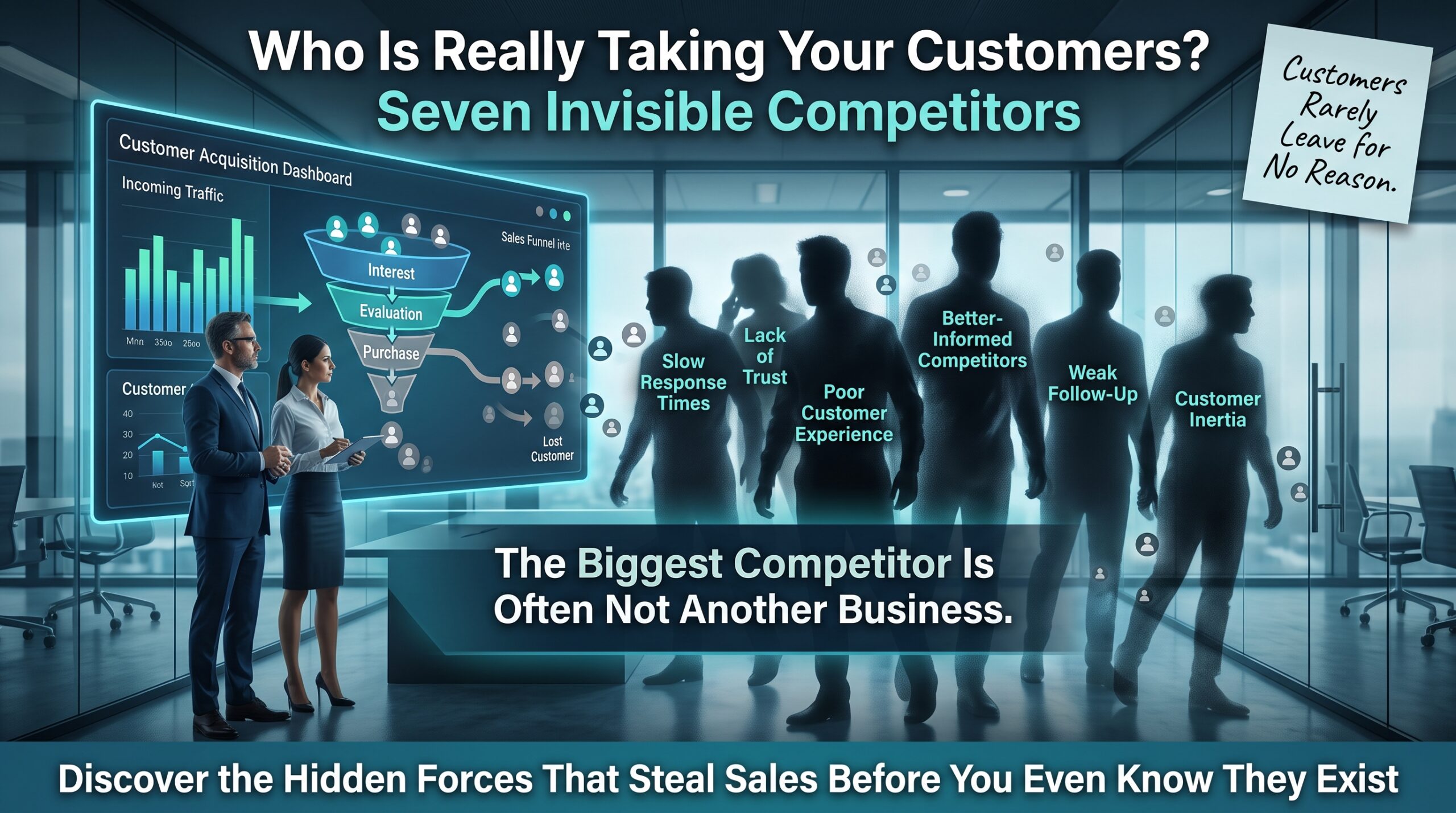
Here is a closer look at each one, so you know what you are really up against.
1. The Invisible Competitor Ranking Above You on Google
Open Google on your phone, search for what you sell and add your suburb. The businesses you see first, especially in the map results, get the lion’s share of clicks and calls. You may not even know some of them exist. They tend to have more reviews, more complete profiles and pages that answer the questions buyers actually ask. If you are not showing up, strong SEO and local SEO is the most direct way to take that space back.
2. The Invisible Competitor Bidding on Your Own Name
Plenty of owners assume that anyone who searches for their business name will find them. But competitors can advertise on searches that include your name, and the paid result may sit above yours. If you run Google Ads, the auction insights report shows which other advertisers appear in the same auctions and how often. Defending your brand terms with well-run Google Ads management is usually cheap and protects customers who were ready to buy.
3. Directories, Marketplaces and Comparison Sites
Quote marketplaces, review platforms and comparison sites stand between you and the customer. They can send leads, but they also teach buyers to compare on price and push you to compete with ten other businesses at once. The fix is not to ignore them. It is to build your own strong channels, such as search, email and referrals, so you are not dependent on a platform that owns the relationship.
4. Social Media Creators and Short Videos
Many people now research on Instagram, TikTok and YouTube before they ever open a search engine. A creator who explains a topic clearly, or a rival who posts useful short videos, earns trust long before the sales conversation. Consistent, helpful content from your own team, supported by social media advertising, keeps you in the conversation.
5. AI Answers and Zero-Click Search
Search results increasingly answer questions directly, and AI assistants summarise options without sending the visitor anywhere. In these moments, the businesses that get named are those with clear, consistent, helpful information across their website, reviews and profiles. Google’s guidance on creating helpful, people-first content is a good place to begin, because the same qualities that please readers tend to help visibility.
6. DIY and the “Do Nothing” Option
Sometimes the competitor is not a business at all. The customer watches a tutorial, buys a cheaper tool, asks a friend or simply postpones. This invisible competitor wins when your message does not make the cost of waiting clear. Educational content, guarantees and simple next steps help buyers feel safe choosing a professional.
7. Your Own Website and Reputation
The hardest competitor to admit to is the one in your own house. A slow website, hard-to-find phone number, outdated opening hours or a handful of old reviews can send customers to a rival who looks more current. Maintaining a complete profile through the Google Business Profile help centre guidelines and investing in a fast, conversion-focused site through website design and SEO closes this gap quickly.
How to Spot an Invisible Competitor in 30 Minutes
You do not need expensive software to find out who is taking your customers. Work through these steps with a coffee and a notepad:
- Search like a customer. Use a private browser window and search your top ten services plus your suburb. Note who appears in the map results, the ads and the first page.
- Check your brand name. Search your own business name and see who else appears above or beside you.
- Review Search Console. Google Search Console shows which queries bring impressions and clicks, and where your pages slip down the results.
- Open the auction insights report. If you run ads, see which competitors overlap with you and how often they appear above you.
- Study trends. Google Trends reveals whether people are searching for alternatives, comparison terms or new brands in your category.
- Compare profiles. Count reviews, check how recent they are and see which competitors answer questions and post photos.
- Ask your customers. Add one line to your enquiry form: “Who else did you look at?” Real answers beat any guess.
Within half an hour you will almost always find at least one invisible competitor you had not considered. That is the moment strategy starts.
How to Win Customers Back From the Invisible Competitor
Once you can see the competitor, you can beat it. The goal is not to copy everyone. It is to be present, trustworthy and easy to choose at each step of the buyer’s search.
Strengthen Local SEO and Your Google Business Profile
- Complete every field of your profile, including services, hours, photos and service areas.
- Ask happy customers for reviews regularly and reply to every one.
- Keep your name, address and phone number consistent across directories.
- Create service and location pages that answer the questions buyers ask.
Protect Your Brand and Capture High-Intent Searches
Run a small branded search campaign so competitors cannot sit above your name, then build campaigns around high-intent keywords such as “near me”, “quote” and “best”. Careful structure, strong ad copy and conversion tracking reduce wasted spend. You can compare options on our Google advertising packages page.
Build a Website That Converts
- Make the site fast and easy to use on a mobile phone.
- Put a click-to-call button and a short enquiry form in view on every page.
- Show reviews, case studies and guarantees near every call to action.
- Explain pricing, process and timeframes in plain language.
Publish Content That Answers Real Questions
The invisible competitor often wins because it answered the question first. Helpful guides, comparison pages, videos and FAQs let you answer it before they do. Our content marketing approach starts with the real questions customers type into search, then builds pages around them.
Keep Customers Close With Email and Remarketing
Winning a customer once is expensive, so keep the relationship warm. Regular email marketing brings buyers back, and remarketing through digital advertising reminds website visitors who did not enquire the first time. Both are efficient ways to stop an invisible competitor from swooping in during the decision period.
Measure What Matters
- Organic traffic, impressions and rankings for your main services.
- Google Business Profile calls, direction requests and website clicks.
- Leads, conversion rate and cost per lead by channel.
- Impression share and auction overlap for paid campaigns.
- New-customer sources, based on what people tell you.
How an Invisible Competitor Looks in Different Industries
The invisible competitor takes different shapes depending on what you sell. A few examples:
- Trades and home services: the map-pack rival with more reviews, plus quote marketplaces that train buyers to compare.
- Health and wellbeing: the clinic that explains treatments clearly in video and answers questions on its website.
- Hospitality and retail: the venue whose photos, posts and opening hours are fresh while yours are out of date.
- Professional services: the firm that publishes helpful guides and appears in AI-generated summaries.
- Online stores: large marketplaces and the shop with faster delivery messaging, which is where a tailored eCommerce marketing plan helps.
The Invisible Competitor in Brisbane and Across Australia
Competition looks a little different from one market to the next. These are general tendencies, not strict rules, but they are useful when you plan campaigns:
- Brisbane: a spread-out city with many suburbs means “near me” searches and Google Maps visibility often decide who gets the call.
- Melbourne: dense, crowded categories reward businesses that stand out with clear proof and strong reviews.
- Sydney: high advertising costs make wasted clicks painful, so conversion tracking and landing pages matter.
- Adelaide: reputation and word of mouth carry weight, so review quality and local content help.
- Perth: long distances and mobile browsing make clear service areas and click-to-call valuable.
- Canberra: government and corporate buyers often research carefully, so authority content builds trust.
The same thinking applies to the Gold Coast, Sunshine Coast, Hobart and Darwin, where seasonal demand and tourism can change who shows up in search from one month to the next. See all of our service locations for more detail.
A 30-Day Plan to Beat the Invisible Competitor
- Week 1: find them. Run the 30-minute spot check, list your top five invisible competitors and note where each beats you.
- Week 2: fix the basics. Complete your Google Business Profile, correct directory details and repair any slow or confusing pages.
- Week 3: protect and publish. Launch a branded search campaign and publish two helpful pages that answer common customer questions.
- Week 4: measure and expand. Review calls, leads and impressions, then plan your next three months around what is working.
If you would like experts to carry the load, compare our digital marketing packages or see how SEO packages are structured.
Frequently Asked Questions About the Invisible Competitor
Who is my biggest invisible competitor?
It depends on your market, but for most local businesses it is whoever ranks above you in Google Maps and the first page of search. Searching like a customer is the fastest way to find out.
How do I find out who is taking my customers online?
Combine searching in a private window, checking Search Console and your Google Business Profile insights, reviewing auction insights if you run ads, and asking new customers who else they considered.
Can competitors bid on my business name?
In many cases, yes. Competitors can bid on keywords that include your name, although rules about using trademarks in ad text are stricter. A small branded campaign is a common way to defend those searches.
How long does it take to beat an invisible competitor with SEO?
It varies with competition, your starting point and the work done. Local SEO improvements often take months rather than days, which is why many businesses combine SEO with Google Ads for faster visibility.
Should I choose SEO or Google Ads?
Most businesses benefit from both. Google Ads can capture high-intent customers quickly, while SEO builds lasting visibility that keeps working without paying for every click.
Final Thoughts: Make the Invisible Competitor Visible
You cannot beat a rival you cannot see, but you can find it, understand it and outwork it. Start with the 30-minute check, fix the biggest gap first and keep measuring. The businesses that win are rarely the biggest. They are the ones that show up clearly, answer questions quickly and make choosing them feel easy.
If you want help uncovering who is taking your customers, request a free review or call 1300 649 299. Our team works with businesses in Brisbane, Melbourne, Sydney, Adelaide, Perth, Canberra and across Australia, and you can browse every digital marketing service to see where we can help first.